Signs at your tap
- White, chalky spots on glasses and dishes straight out of the dishwasher
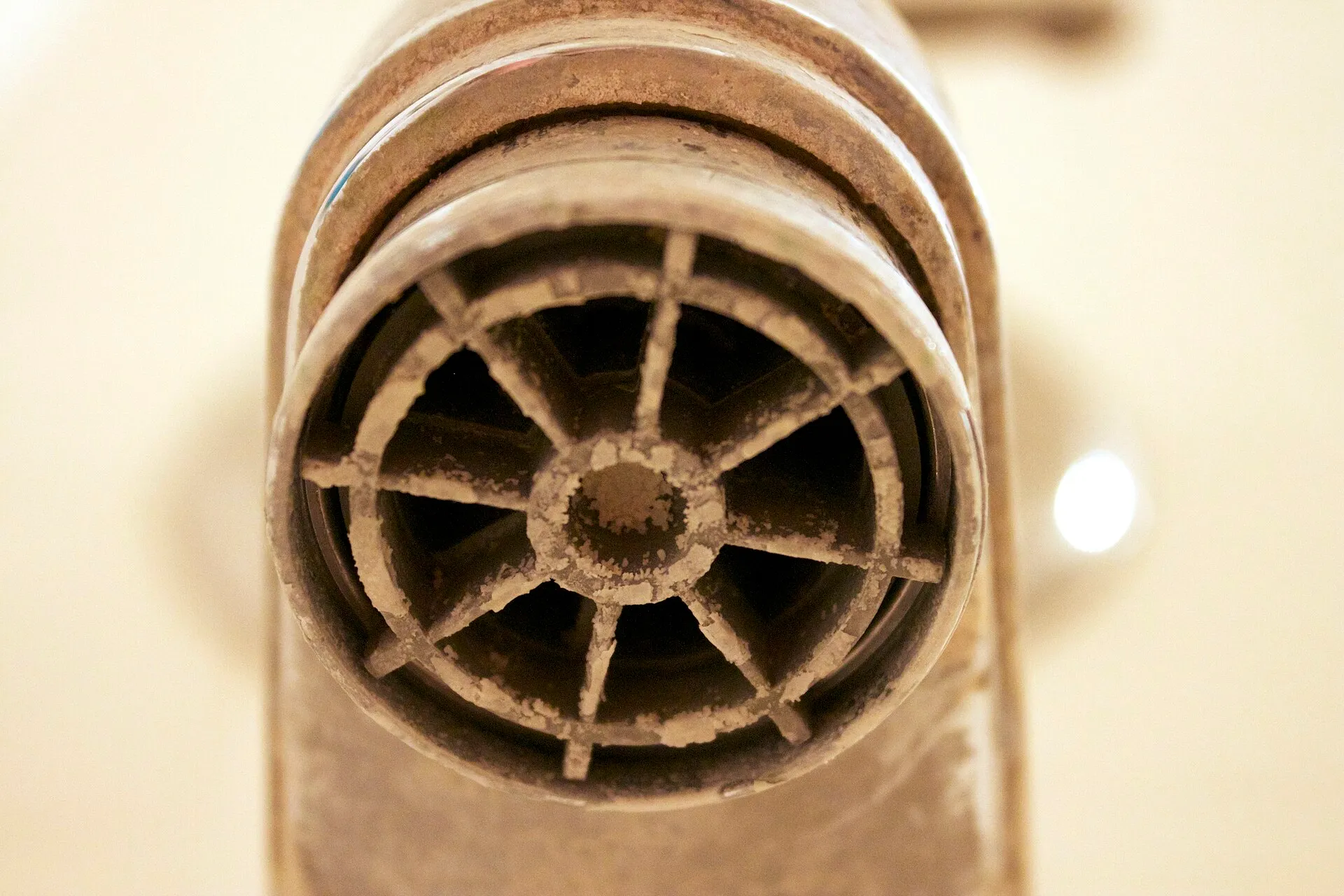
- Crusty scale building up on faucets, showerheads, and around drains
- Soap and shampoo that never quite lather, and skin that feels filmy or dry
- Stiff, scratchy laundry even with plenty of detergent
- A water heater that pops, crackles, or rumbles when it runs
What is hard water?
Water hardness is measured in grains per gallon (gpg). Anything above about 7 gpg is officially “hard.” A lot of metro suburbs run 15 to 25+ gpg — several times that threshold, and among the hardest tap water in the United States.
The reason is geology. Most suburbs pump their water from deep groundwater aquifers, and as that water sits in limestone and sandstone it dissolves calcium and magnesium — the two minerals that make water “hard.” Minneapolis and St. Paul soften their river water centrally at the treatment plant, so their taps run moderate. Most suburbs on wells don't soften at all, which is why the water reaches your home hard.
Hard water isn't a health problem — those minerals are the same ones in a multivitamin. It's a plumbing and appliance problem, and an expensive one if it's left alone.
Why hard water matters
Every gallon of hard water leaves a little mineral behind wherever it warms up or dries out. Over months and years that becomes scale — the crust you see on a showerhead, and the layer you don't see coating the inside of your pipes, dishwasher, and water heater.
Your water heater takes the worst of it. Scale settles on the burner or element and forces the tank to heat your water through a layer of rock — the popping sound is water boiling under that crust. It drives up energy use and can cut years off the tank's life.
Add it up and hard water quietly taxes the whole house: shorter-lived appliances, more soap and detergent, spotty glassware, and dingy laundry. None of it is dangerous. All of it is avoidable.
What to do about hard water
The real fix is a water softener — an ion-exchange system that swaps the hardness minerals out before the water ever reaches your fixtures. Sized correctly to your household and your actual hardness number, one softener ends scale, spotting, and dry skin across the entire home.
What about salt-free “conditioners”?
Salt-free descalers have their fans, but for genuinely hard water, salt-based ion exchange is the only approach that actually removes hardness rather than trying to manage it. We'll give you the straight version of that conversation — not the one that ends with whatever's on the truck.
Sizing matters more than most people realize: too small and it runs out of soft water mid-shower, too big and you waste salt and money. That's why we test at your tap and size the system to real numbers.