Same-day & emergency service available · Serving Minneapolis–St. Paul

Loon Plumbing

Disinfection

Chlorine in Your Water

Chlorine keeps city water safe on its way to you. If you can taste or smell it, here's what's going on and how to get it out of your drinking water.

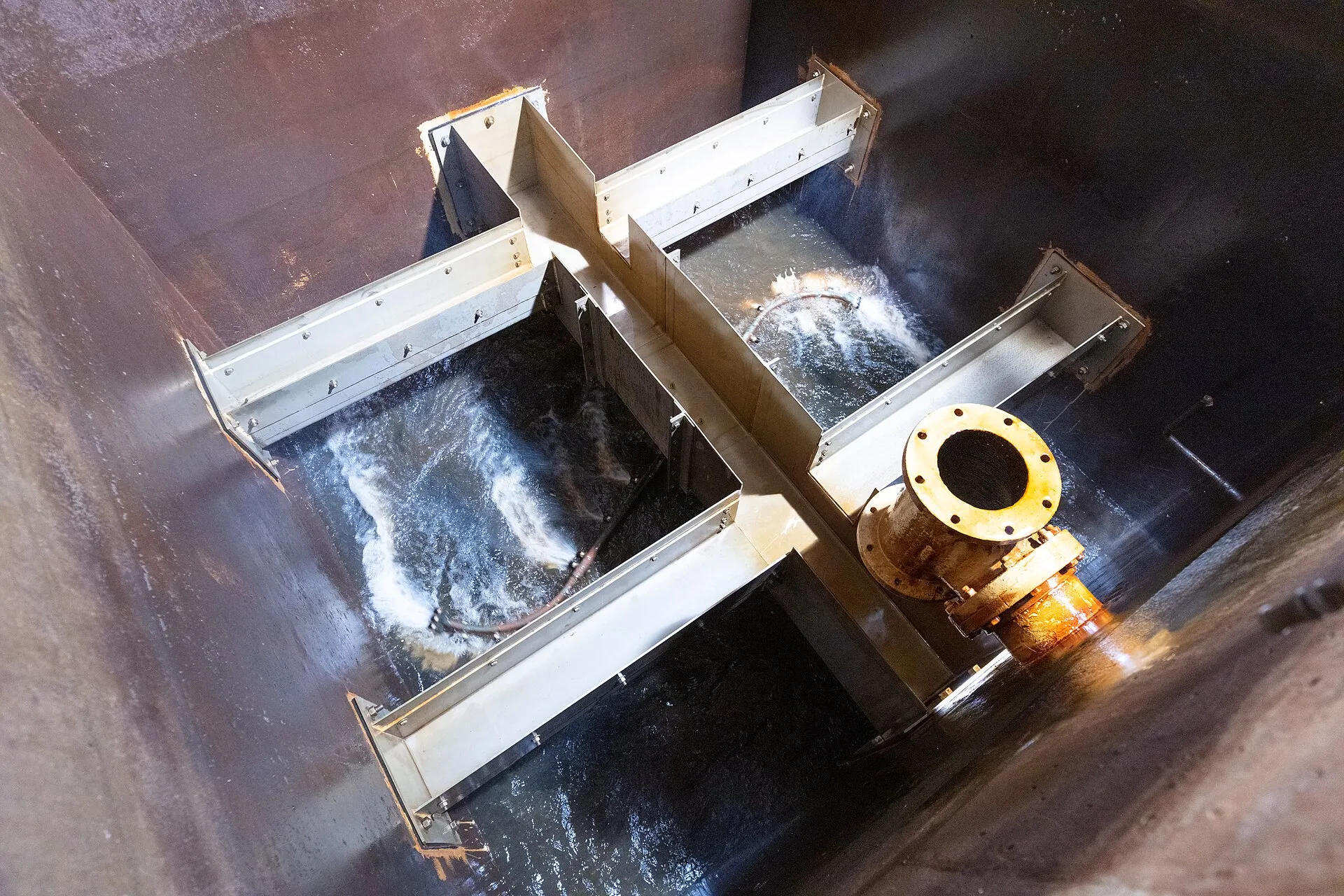
Filter being cleaned at a municipal water treatment plant
Chlorine is added at the treatment plant to keep water safe across miles of mains.YellowstoneNPS · Public domain

Signs at your tap

  • A “swimming pool” taste or smell from the cold tap
  • The smell is strongest when you first fill a glass, then fades
  • Coffee, tea, or ice that tastes faintly chemical

What is chlorine in tap water?

Chlorine is a disinfectant. Cities add a small, carefully controlled amount so the water stays safe for the entire trip from the treatment plant, through the water mains, and into your home. It's one of the great public-health success stories of the last century.

At the levels used in drinking water it's considered safe. But chlorine is volatile — it's designed to keep working all the way to your faucet, and that's exactly why you can sometimes taste and smell it once it arrives.
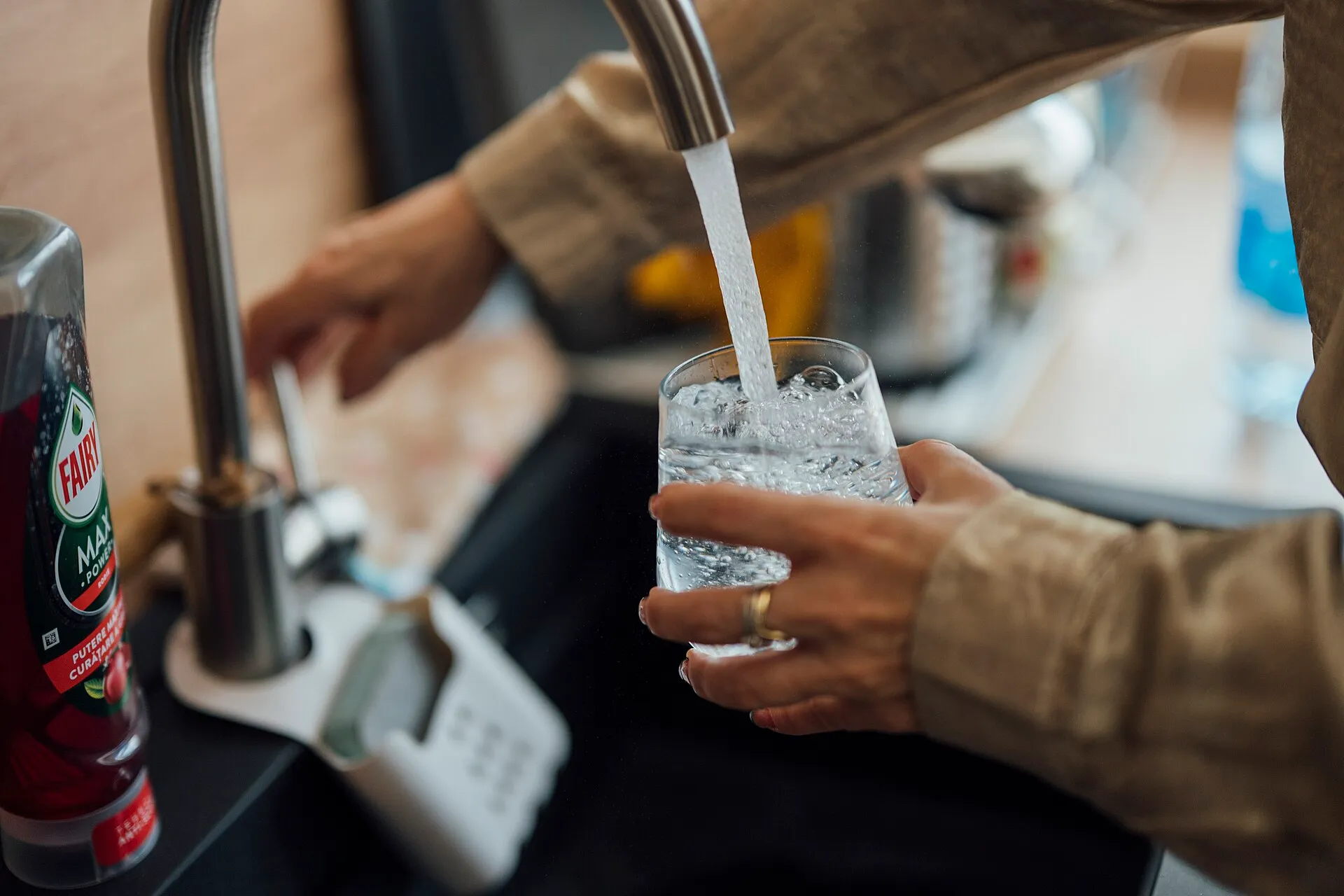
Person filling a glass with water at a kitchen sink
By the time it reaches your glass, the taste is easy to filter out.Shixart1985 · CC BY 2.0

Why chlorine in tap water matters

For most people this is purely about taste and smell — reason enough to want it gone from your drinking water and your morning coffee. Chlorine can also be drying to skin and hair for people sensitive to it, and it's a real concern for fish tanks and home brewing, where even trace chlorine causes problems.

There's one more wrinkle worth knowing: when chlorine reacts with natural organic matter in water it can form small amounts of disinfection byproducts (you'll see them on a water report as TTHMs or HAA5). Utilities keep these under strict federal limits, and the same carbon filtration that fixes the taste removes them too.

What to do about chlorine in tap water

Chlorine is one of the easiest things to remove from water. Carbon filtration is the standard fix, and you have two sensible options depending on what you want:

  • Whole-home carbon filter — takes chlorine out at the point where water enters the house, so every tap, shower, and appliance gets dechlorinated water.
  • Under-sink or reverse-osmosis system — treats just the drinking and cooking water at the kitchen tap, for less.

Which one makes sense depends on whether you're after whole-house comfort or just clean drinking water. We'll test what's actually at your tap and match the fix to it — no oversized gear you don't need.

Questions & answers

Chlorine FAQs

Is it safe to drink chlorinated tap water?

Yes. Cities use carefully controlled amounts to keep water safe across miles of pipe. Many people simply don't like the taste or smell — and that's easy to filter out.

How do I get the chlorine taste out of my water?

Carbon filtration removes it cleanly — either a whole-home carbon filter at the point of entry, or an under-sink or reverse-osmosis unit that treats just your drinking water for less.

Does boiling water remove chlorine?

Boiling will drive off some chlorine, but it's slow and impractical for everyday use — and it does nothing for other issues. Carbon filtration is the real fix.

Does a water softener remove chlorine?

No. A softener removes hardness minerals, not chlorine. You need carbon for taste and odor — many homes benefit from both.

Free in-home water test

Get your real numbers — no charge, no pressure

Your city's report tells you what leaves the plant. We test at your tap, in your home, for free — hardness, iron, chlorine, pH, and dissolved solids in about twenty minutes. If the honest answer is “you're fine,” that's exactly what you'll hear.

Book my free water testCall or text (612) 445-6346

Financing available on treatment systems — ask when you call.

Curious first? Get your free 2-minute Water Report →

Your city

Water is different in every metro suburb

Hardness, treatment, and what's in the water change from one city to the next. See the specifics where you live — orget your free WaterIQ report, built from your city's own data.

Request service

Book your free in-home water test

Send the form and we'll call you back — usually within the hour during business hours. In a hurry or standing in water? Skip the form:

(612) 445-6346

Same-day & emergency service available.

Call (612) 445-6346Request service